
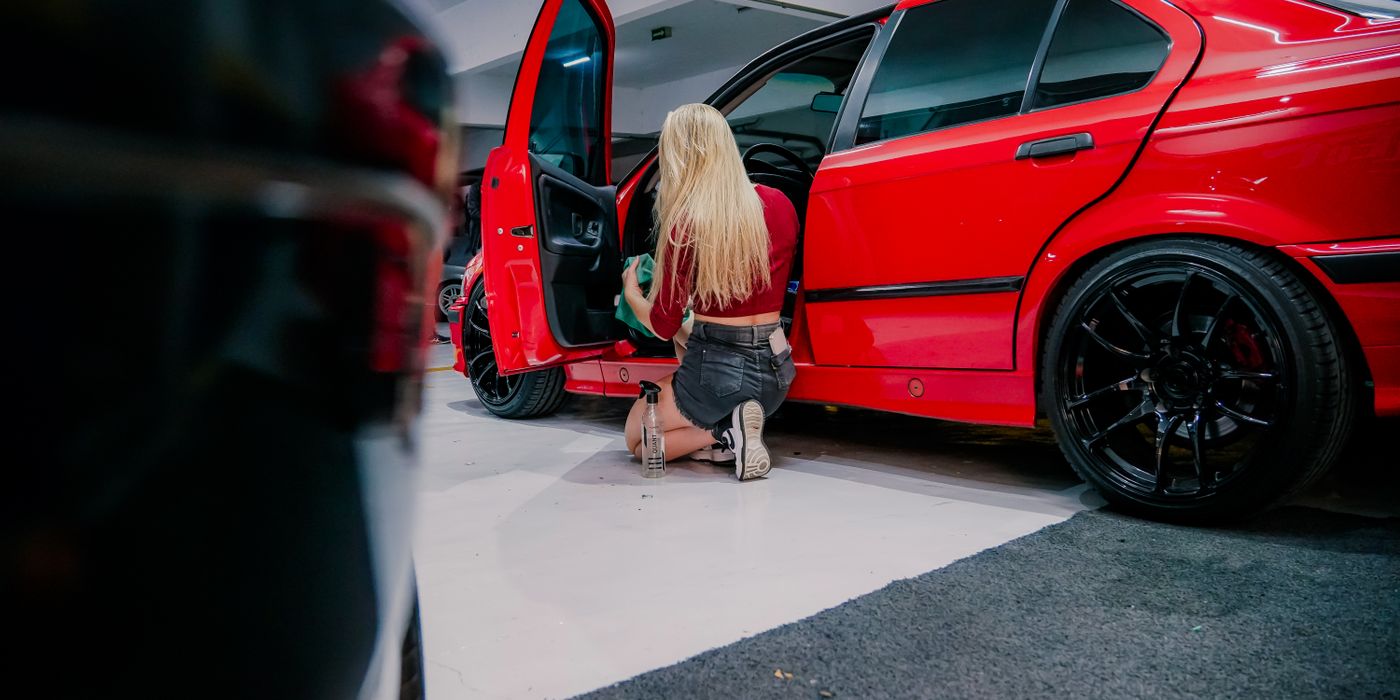
People ask us to settle this one constantly, usually framed as which is better. It's the wrong question. Paint protection film and ceramic coating solve different problems, and the most common expensive mistake we see is someone buying a coating expecting it to do the film's job.
The thickness difference is the whole story
A ceramic coating is measured in microns. Paint protection film is measured in mils — and one mil is about 25 microns. Premium films run six to eight mils of urethane, which puts the film somewhere in the neighborhood of fifty to a hundred times thicker than the coating. That isn't a marketing distinction. It's the reason one of them absorbs impact energy and the other has no physical mechanism to.
A ceramic coating will not stop a rock chip. Anyone who tells you otherwise is selling something.
What PPF actually is
Modern premium film is a thermoplastic polyurethane, built in layers: an adhesive, a urethane body that takes the hit, and a clear self-healing topcoat. The self-healing part is real and slightly magical to watch — the topcoat's polymers have shape memory, so heat from the sun or warm water lets them flow back to their molded shape, closing fine swirls and light surface scratches. It has limits worth stating plainly: anything that cuts through the topcoat stays, and nothing heals a chip that punched through the film.
The yellowing reputation is largely a legacy problem. Older PVC and aromatic urethane films discolored badly; today's aliphatic films are UV-stable and typically carry ten-year warranties against yellowing, cracking, and delamination. That said, cheap unbranded film and neglected edges still discolor, and staining from contamination left to sit is a more common complaint than true yellowing.
Coverage, and roughly what it costs
- Partial front — bumper, mirrors, headlights, and the leading 18–24 inches of hood and fenders. Cheapest, but it leaves a visible film line across the hood.
- Full front — the whole hood, full fenders, bumper, mirrors, headlights. No film line, and it covers where the overwhelming majority of impact damage lands. The value pick for most daily drivers.
- Track pack — full front plus A-pillars, roof leading edge, rockers, and rear-quarter impact zones.
- Full body — every painted panel.
Cost varies enormously with vehicle size, film brand, and coverage, and Northern California labor sits toward the higher end of national norms. That spread is exactly why we quote film in person rather than publishing a price list — the same coverage tier on a compact coupe and a lifted truck are not the same job. Call us and we'll give you a firm number for your vehicle.
What the coating is genuinely better at
Chemistry and UV. A coating gives you hydrophobics that make washing faster and safer, real resistance to etching from bird droppings and bugs and hard water, UV stability that slows oxidation, and a depth of gloss film can't replicate across an entire car at a sane price. It also covers every panel, whereas film realistically covers the front end for most budgets.
What it does not do, beyond stopping chips: it won't fix existing defects. A coating locks in whatever the paint looks like underneath it, swirls included. That's why correction comes first — always.
You can, and often should, do both
Coating over film is standard practice at the high end, and it's not upselling. PPF's topcoat is more porous and more stain-prone than paint clear coat, so a coating on top makes the film slicker, easier to wash, and less prone to water spotting. The usual combination is film on the front end where impacts happen, and coating over the entire car — film and bare paint alike — so the whole vehicle looks and behaves consistently. One technical note: use a coating the manufacturer rates for film, since a coating formulated to be hard and inflexible fights a surface that needs to flex and self-heal.
So which do you buy?
- Film, if the car is new or high-value, you commute serious freeway miles on I-5, 50, or 80, the paint is dark or delicate, or you're keeping it long-term. It's the only thing that prevents chips.
- Coating, if the budget is tighter, the car is garaged or low-mileage, or your priority is easier upkeep and gloss rather than impact protection.
- Both, if the budget allows — film where the rocks hit, coating everywhere the sun and chemistry work.
Neither one substitutes for washing the car correctly. If you'd like an honest read on which your vehicle actually needs, tell us what you drive and how you drive it — we'll tell you if the cheaper answer is the right one.

The Nor-Cal Crew
Mobile detailing, ceramic coating & paint correction · Sacramento, California