
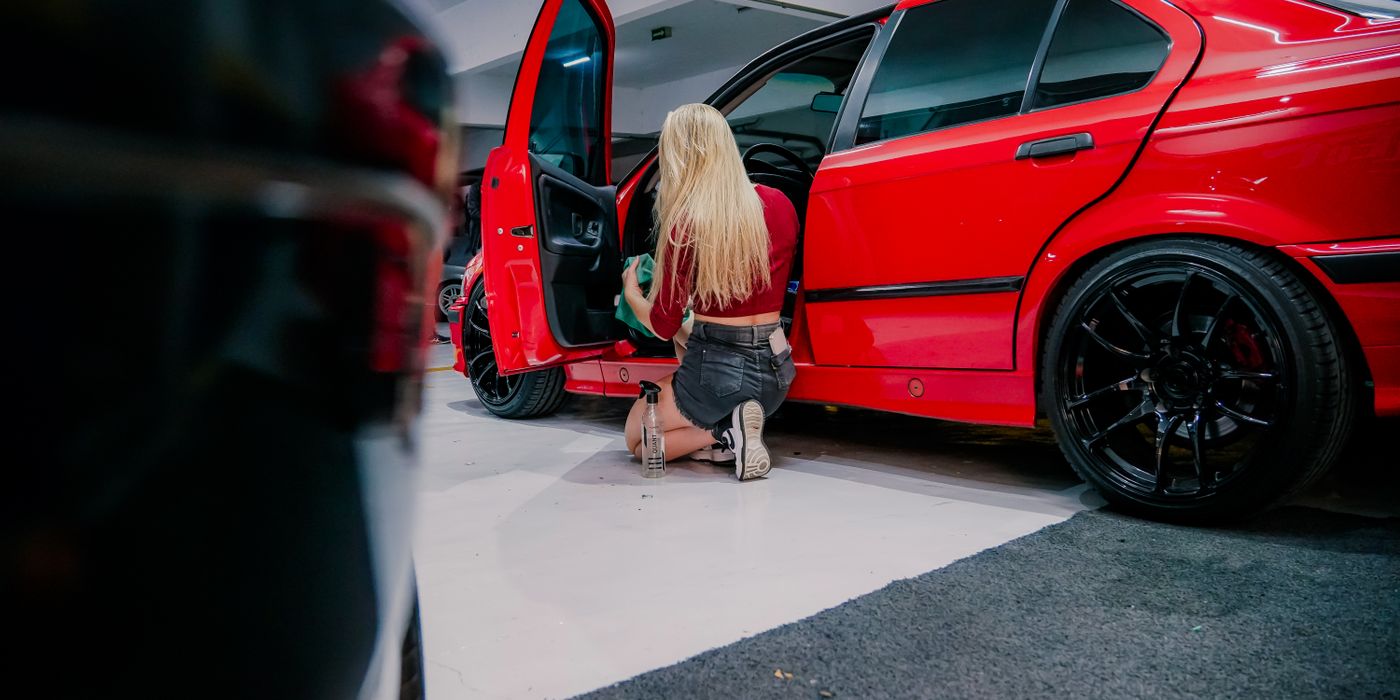
Every show season we get the same call in the same week. Someone has a car entered on Saturday, it is Wednesday, and they want it show ready. Sometimes we can help. Usually what we can deliver in that window is a very clean car, which is not the same thing.
The gap is worth explaining, because the work that separates a clean car from a competitive one is almost entirely work that takes time to do and time to cure.
Judges look where you do not wash
A judged walkaround, and a serious auction viewing, follow a predictable path, and almost none of it is the parts of the car you see from the driver's seat.
- Door, hood, and trunk jambs. These are the first thing a judge opens and the last thing most people clean. A car with immaculate paint and grimy jambs reads as a wash rather than a detail.
- Wheel wells and the inner barrels of the wheels. Both sides of the wheel, not the face.
- Under the hood. Not a wet-look engine bay, a clean and correct one, with the hoses, the hardware, and the seams presenting as maintained rather than dressed.
- The underside of the trunk lid, the spare tire well, and the jack tools.
- Exhaust tips, inside and out.
- Glass, from both sides, and the top edge of the door glass that sits inside the seal.
- Badges, emblems, grille slats, and every panel gap, where polish residue accumulates and dries white.
Polish residue in the gaps is the single most common tell of a rushed job, and it shows up brilliantly under the low, raking light on a show field in the morning.
Correction cannot be rushed, and correction is the point
Show light is unforgiving in a way that a garage and a parking lot are not. Direct sun at a low angle, or the LED inspection lights at an indoor event, reveal defects that are invisible in ordinary conditions: fine swirling, hologramming left by a rotary, and buffer trails from a previous detail.
Correcting to that standard is a multi-stage process. A cutting pass to remove the defects, at least one refining pass to restore clarity, and inspection under multiple light sources between stages. On a full-size car that is days, not an afternoon, and it is not work that improves under time pressure.
There is also a chemical reason the calendar matters. If the car is getting a coating, that coating needs its cure time. A coating applied on Thursday for a Saturday show has not reached its final hardness, and the finish is at its most vulnerable during exactly the days you are trailering, wiping down, and parking it on grass.
The paint is judged in light that is designed to find your mistakes. Everything you did in a hurry shows up first.
A realistic timeline
- Six to eight weeks out for a car that needs real correction and a coating. This is the honest lead time for a full multi-stage job on a car that has not been maintained to that standard.
- Three to four weeks out for a car in good condition that needs a refinement pass and protection.
- Two weeks out for a maintained show car that needs the deep work: jambs, engine bay, wheels off, glass, and a light enhancement.
- The final days before the event are for the last wash, the interior, and the details. Not for correction.
- The morning of, for the wipe-down after transport, which is its own skill and its own set of towels.
The interior gets judged too
Interiors are where a lot of otherwise strong cars lose ground, because the standard is different from clean. Carpet with consistent nap direction, no dressing sheen on anything, seat belts fully extended and cleaned along their whole length, seat tracks and rails clean, and every crevice and vent addressed.
Glossy dressing on a dashboard is a common mistake. It throws glare, it collects dust between the trailer and the field, and to an experienced eye it reads as covering something rather than cleaning it. Matte, correct, and consistent wins.
Auction prep is a different job with a different goal
A car going to auction is being photographed for a catalog and inspected by buyers who are looking for reasons to bid less. The priority shifts toward presentation that survives close inspection and photographs honestly.
That means the engine bay and the undercarriage get more attention than they would for a local show, because bidders look there. It means a correction that eliminates the swirling that shows up in catalog photography under studio lighting. And on an original car it means a conversation about how far to go, because over-restoring a survivor can genuinely reduce what it makes.
Between shows
The cars that show well all season are the ones that never fall out of condition. A coated show car can be brought back with a rinseless wash and a careful dry, which means no correction is needed between events and the paint is not being worked repeatedly.
That is the practical argument for coating a car that gets shown: it protects the correction you already paid for, and on a car where the correction was a multi-day job, that is worth considerably more than it is on a daily driver.
If you have a car entered this fall, call now rather than the week of. There is a real answer about what fits in the time you have, and sometimes that answer is that the show after this one is the target worth aiming at.

The Nor-Cal Crew
Mobile detailing, ceramic coating & paint correction · Sacramento, California