
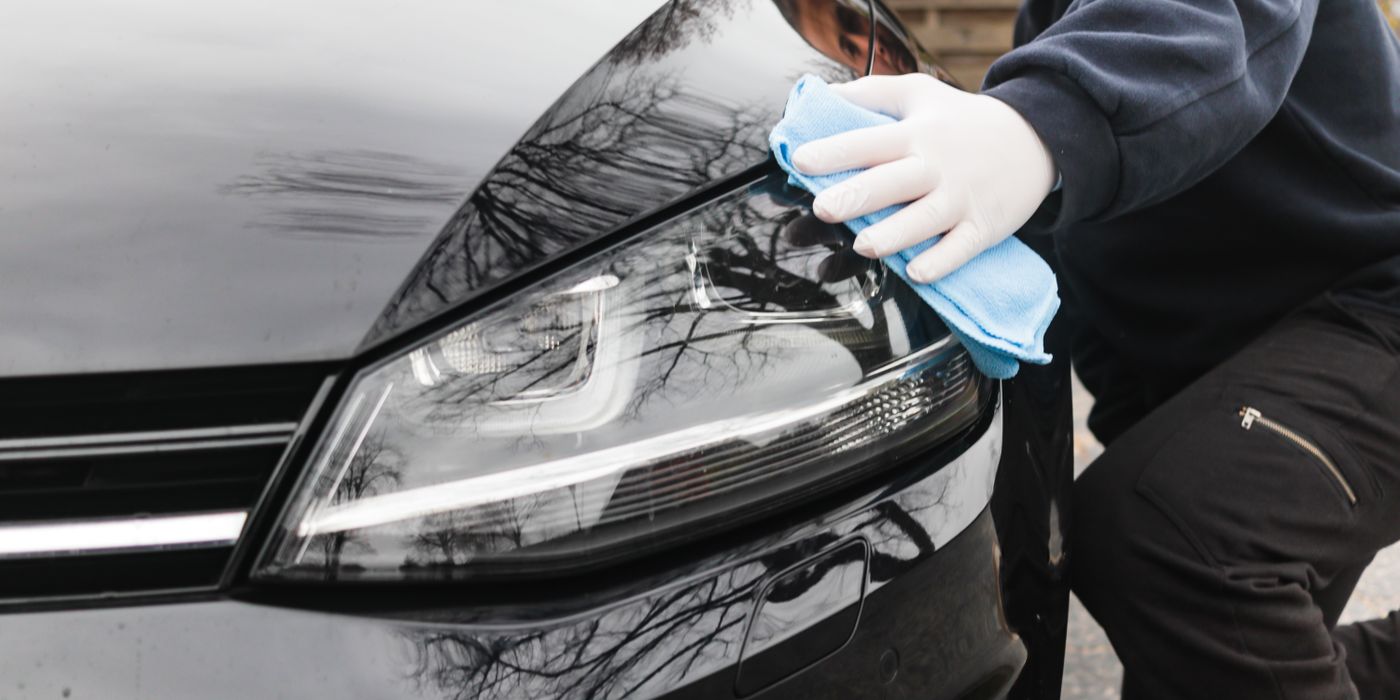
Most people who have restored a pair of headlights have watched them fade again. The lens looked new for a few months, then a light haze came back, then the yellow. The sanding was not the problem. What happened after the sanding was.
We wrote about why headlights yellow and what restoration can and cannot fix in an earlier post. This one is about the part that decides whether you are doing it again next year.
Why a restoration fails
Headlight lenses are polycarbonate, which breaks down in UV. From the factory, each lens has a hard UV-resistant coating on the outside. Yellowing starts when that coating wears through. Restoration sands off the damaged plastic and whatever coating was left, so a freshly restored lens is bare polycarbonate, with less UV protection than it had before you started.
Leave it bare and the sun starts the same process right away, only faster. So a lens polished with a cheap kit and nothing else can look worse within a year than it did before.
Restoration removes the factory UV coating. Whatever replaces it decides how long the job lasts.
The protection options, compared
There is no independent long-term testing that ranks these, so take any precise lifespan claim with some skepticism. What we can say is how they work and where each one fits.
Wipe-on UV sealant
A liquid coating wiped onto the clean lens that cures into a thin protective layer. It is the most common finish on restorations because it is quick and adds little cost. It is also the thinnest, so it wears fastest, especially on cars parked outside. Plan on re-applying it periodically.
Two-part (2K) clear coat
A sprayed clear coat with a separate hardener, closer to what the factory used. Many in the industry consider it the most durable option. It needs careful masking and a clean, dust-free spot to spray, and it takes longer to cure.
Paint protection film
Clear urethane film over the lens adds a physical layer against rock chips and sandblasting from the freeway, which are part of what wears down the coating in the first place. Film is a common part of front-end protection packages. It works best over a lens that already has a UV coating on it, not as the only protection on bare plastic.
What else decides how long it lasts
- Where the car parks. A garaged car keeps a restoration far longer than one parked in the sun every day. In the Valley, that difference is large.
- How it is washed. Harsh degreasers and brush car washes wear coatings down faster.
- Freeway miles. Sand and grit at speed abrade the lens, which is why film on the headlights is worth considering for commuters.
- Whether the coating is maintained. A wipe-on sealant that gets refreshed lasts far longer than one that is left alone.
Early signs it is wearing out
Catch it early and a refresh is quick. Look for a slight haze on the top half of the lens, which gets the most sun, a lens that stays wet-looking longer than the paint after a rain, or a dull, rough patch when you run a fingertip across it. At that stage a light polish and a fresh coat of protection usually brings it back without full sanding.
When to replace instead
Restoration only fixes the outer surface. If the haze is on the inside of the lens, if there is moisture or a crack in the housing, or if the lens has been restored several times and the plastic is thin and wavy, replacement is the better answer. The same goes for lenses with deep crazing, the fine web of cracks that sanding cannot reach.
For most cars, though, a proper restoration with real UV protection is the cost-effective answer. It takes about an hour and can be done in your driveway alongside a detail. When you book one, ask what goes on the lens at the end. If the answer is nothing, or a dressing, expect to be doing it again soon.

The Nor-Cal Crew
Mobile detailing, ceramic coating & paint correction · Sacramento, California