
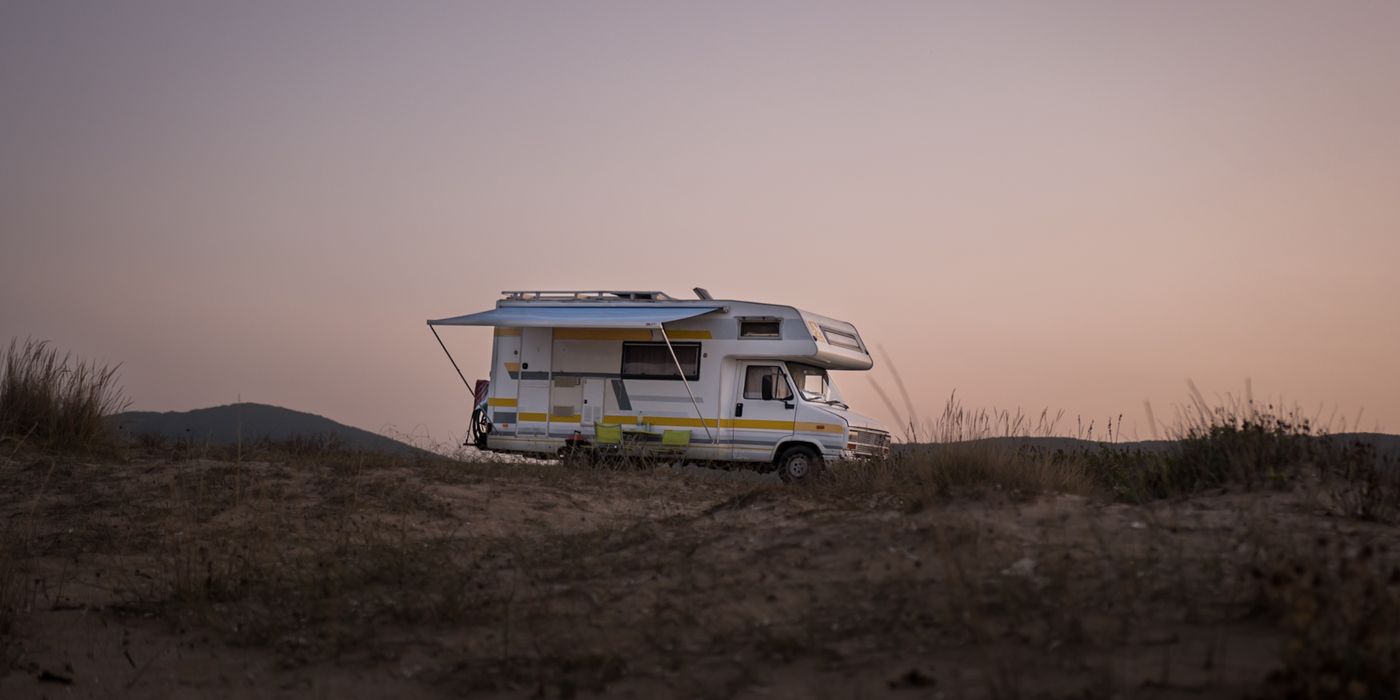
Awning fabric gets treated like a tarp. It is not one. It is a coated technical fabric with a working surface that can be removed, and once it is gone, the fabric underneath ages fast and cannot be brought back.
We get asked to clean a lot of awnings that were already past saving, and the damage was almost always done by the previous cleaning rather than by the weather.
The two fabrics, and why it matters which you have
Most RV awnings are one of two materials. Vinyl awnings are a woven base with a vinyl coating laminated to both sides, and that coating is the waterproofing. Acrylic awnings are a woven, solution-dyed fabric that breathes, sheds water because the fibers are treated, and feels like canvas rather than plastic.
- Vinyl feels smooth and slightly rubbery, is usually shiny on at least one side, and is completely waterproof. It is the more common factory fitment.
- Acrylic feels like fabric, has a matte texture, and often has a woven pattern you can see up close. It breathes, which is why it dries faster and resists mildew better.
- Vinyl is the one that grows mildew. The mildew is not eating the vinyl, it is feeding on dirt and organic film sitting on the surface, which is why keeping it clean is the actual preventive measure.
- Acrylic loses its water repellency over time as the factory treatment wears, and it can be re-treated. Vinyl cannot be re-coated once its surface is compromised.
What destroys awnings
In rough order of how often we see it:
- Rolling it up wet. This is the leading cause by a wide margin. A damp awning rolled tight is a sealed, dark, warm environment, and mildew colonizes it within days. It also stains along every fold line, which is why aged awnings show that regular striped pattern.
- Pressure washing. A pressure washer can lift the vinyl coating off the woven base, and once delamination starts at an edge it keeps going. On acrylic it drives the water-repellent treatment out and pushes dirt into the weave.
- Bleach. Chlorine bleach on acrylic degrades the fibers and strips the treatment. On vinyl it can work on mildew stains, but it also attacks stitching, which is often polyester thread that fails long before the fabric does.
- Stiff brushes. Anything aggressive enough to scrub mildew off vinyl is aggressive enough to scuff the coating, and a scuffed surface holds more dirt, which grows more mildew. It is a loop that ends in a replacement.
- Leaving it out permanently. Awnings are designed for shade during a stay, not for continuous exposure. Sun and wind do more damage across an entire summer of standing out than years of normal use.
How to clean it correctly
The method is unexciting, which is the point. Extend the awning fully, hose it down with a normal garden hose from both sides, and let it soak. Apply a mild, fabric-appropriate cleaner, ideally one made for awnings, and give it real dwell time rather than muscle. Agitate with a soft-bristle brush or a wash mitt, working the underside as well as the top. Rinse thoroughly, and rinse the sidewall below it too so nothing dries on the paint or gelcoat.
Then the part people skip. Leave it fully extended until it is completely dry, front and back, including the section that wraps the roller tube. If the weather is going to turn before that happens, wait for a better day to clean it.
One approach worth avoiding entirely: the trick of rolling the awning up with cleaner on it to let the chemical work. It puts wet chemistry against itself in a sealed roll and it is exactly the condition that grows mildew in the first place.
Awning fabric almost never fails from the sun before it fails from being rolled up damp.
What can and cannot be recovered
Surface mildew, dirt, road film, and black streak run-off from the roof clean up well on both fabrics if the coating is intact. Light staining usually improves substantially. That is a good outcome and it is most of what we are called for.
What does not come back: mildew that has grown into the weave and stained the fibers themselves, vinyl that has delaminated or gone brittle and cracks along the fold lines, pinholes, failed stitching, and acrylic that has lost its repellency and now soaks through. On acrylic, the repellency alone can be restored with a re-treatment. The rest is a replacement conversation.
We sort yours into one of those two before starting. There is a version of this job where the honest answer is that cleaning it hard enough to look better is what finally finishes it off, and we would rather say so.
Keeping it alive
- Wash it two or three times a season rather than once a year. Frequent gentle cleaning prevents the buildup that mildew feeds on, and it never requires anything aggressive.
- Roll it in at the first sign of wind. Wind damage to the arms and the roller is a separate and much larger expense than fabric.
- Never roll it up wet. If you have to break camp in the rain, extend it and dry it fully at the next stop or when you get home.
- Keep the roof clean. Most of the staining on an awning arrives from above, carried down by rain off the roof.
- Use a cover or store under shelter if the rig sits outdoors between trips. Sacramento summers are hard on every polymer on an RV, and the awning is the thinnest one.
If you are not sure whether yours is vinyl or acrylic, or whether the staining is on the surface or in the fibers, send a close photo in daylight and one from underneath. That is usually enough for us to tell you what it needs and what it is worth.

The Nor-Cal Crew
Mobile detailing, ceramic coating & paint correction · Sacramento, California