
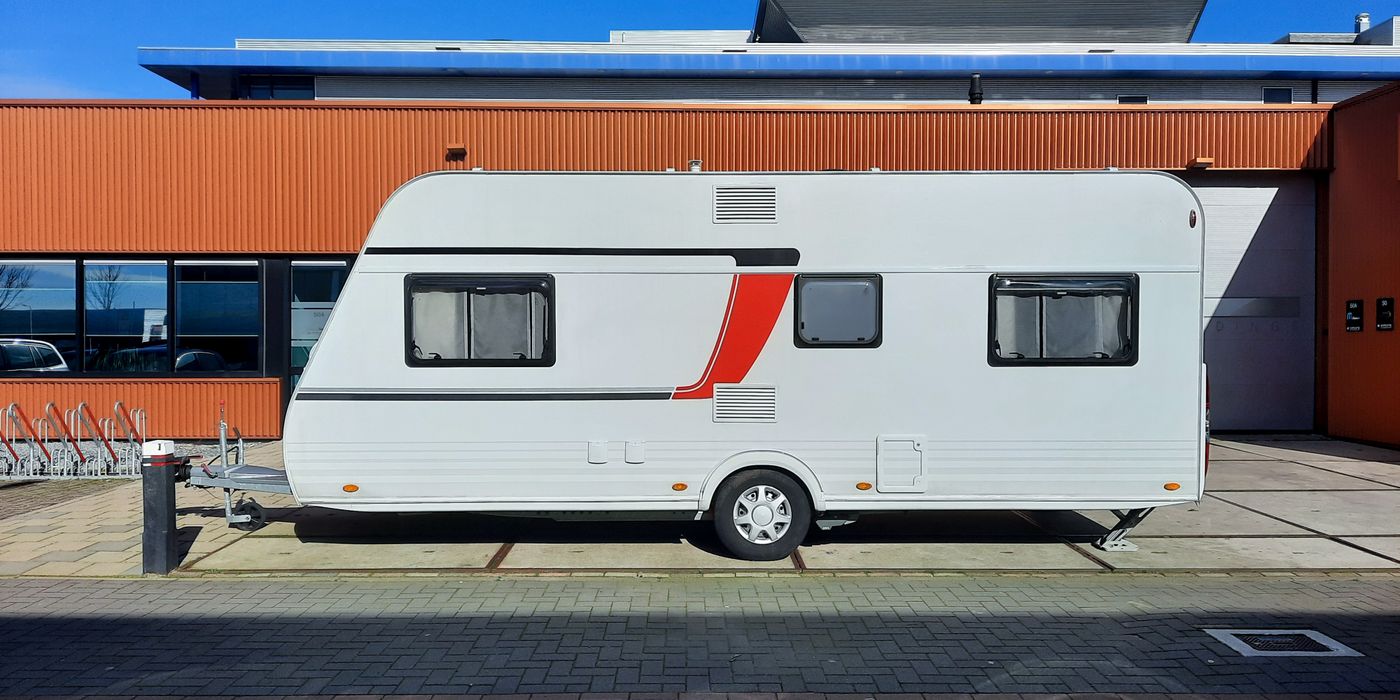
Black streaks are the most common complaint we hear from RV owners after a winter outdoors. They run down from the gutter spouts, from the corners of the roof, and from under the windows, and they come back after every rain. Scrubbing harder at the sidewall does not stop them, because the sidewall is not where they start.
Where they come from
Everything that lands on the roof stays there until rain washes it off: road grime, dust, pollen, soot, and, on rubber roofs, the chalky residue the membrane sheds as it ages. Rain carries all of it to the edges, and the roof gutters funnel it out through spouts at the corners. When that water dries on the sidewall, the grime is left behind in a line.
Over time the residue bonds to the surface, especially if the gelcoat has no wax or coating on it. Oxidized gelcoat is slightly porous, so streaks set in faster and deeper on an older rig. That is why some RVs streak badly and others barely do.
The streak is on the wall, but the dirt came from the roof. Clean only the wall and the next rain draws it again.
Removing them without damage
Fresh streaks often come off with a regular RV wash. Set-in ones need a dedicated black streak remover, a cleaner made to lift that residue without abrasives. The rules that keep you out of trouble:
- Check the label for your surface. Fiberglass, painted caps, and aluminum siding do not all tolerate the same chemicals, and the wrong one can stain or dull the finish.
- Use a soft wash mitt or a soft brush. Abrasive pads and magic erasers take the streak and some gelcoat with it.
- Keep it off decals as much as possible, and rinse it off them quickly. Aged graphics stain and lift easily.
- Work in the shade and keep the sidewall wet. Cleaner that dries on a hot panel can leave its own marks.
- Rinse thoroughly. Residue left behind attracts the next layer of dirt.
If the streaks will not come out with a proper cleaner, the gelcoat underneath is usually oxidized and stained. At that point the fix is polishing the affected areas, not more scrubbing.
Clean the roof, carefully
The single most effective fix is washing the roof regularly, so there is less grime up there to run down. How you do it depends on the roof. Rubber roofs need a cleaner made for them, a soft or medium brush, and no petroleum solvents or citrus cleaners, which can damage the membrane. TPO and fiberglass roofs have their own approved products.
Two warnings. First, keep the sidewalls wet while you wash the roof; the runoff from a roof wash is exactly what makes streaks, and it can spot or etch a dry sidewall. Second, check whether your roof is built to be walked on before you climb up. Many are not.
Three changes that stop them coming back
- Protect the sidewalls. A wax, sealant, or ceramic coating gives the grime a slick surface to slide off instead of bonding to. This makes the biggest difference of anything here.
- Add gutter spout extensions. These clip onto the existing spouts and push runoff away from the sidewall. Owners report mixed results in wind, but they help on a parked rig.
- Wash the roof on a schedule. Before storage, and again before the first trip of the season, is a reasonable minimum here in the Valley.
When it is part of a bigger job
If the streaks have set in, the gelcoat is usually chalky too, and the roof probably needs a look at its sealant. That combination is where a full exterior detail makes sense: wash the roof and inspect the seals, remove the streaks, correct the oxidation, and put a coating on so the next rain runs clean.
Send us a photo of the worst sidewall and one of the roof if you can get it safely. We can tell from those whether it is a wash job or a correction job.

The Nor-Cal Crew
Mobile detailing, ceramic coating & paint correction · Sacramento, California