
Owners tend to find out about the 90-day rule at the worst possible moment: when they file a claim for a roof leak and are asked to show that the seals were inspected and maintained. Many cannot. The rule was in the owner's manual the whole time, usually in the maintenance section nobody reads on delivery day.
Where the 90 days comes from
Camping World's guidance summarizes it well: most manufacturers recommend inspecting the exterior seams and seals every 90 days. Forest River, one of the largest builders, treats cracked sealant as preventive maintenance that the owner is required to inspect and maintain on that schedule. Other builders use similar language, sometimes with a semiannual inspection and an annual reseal.
The reasoning is sound. Sealant is a consumable. It ages under UV and cracks with the constant flexing a rig does on the road. Four checks a year is roughly the interval at which you catch a bead that has started to fail before it lets water in.
What the long roof warranty actually covers
Many rigs are sold with a roof warranty that sounds very long. It is worth knowing who stands behind it and what it covers. On many units that long coverage comes from the company that made the roof membrane, not from the RV brand, and it applies to the material.
Dicor's FAQ is a clear example. It says its roof warranty covers premature degradation due to natural weathering. It is offered to the original purchaser only and cannot be transferred, and Dicor explains why: the warranty is contingent on the roof being properly maintained, and once a unit changes hands that maintenance cannot be confirmed. Sealant failure is a maintenance item, not a material defect.
Two practical consequences follow. If you bought your rig used, the membrane warranty may not apply to you at all. And if you are the original owner, the warranty assumes you did the maintenance, which brings you back to the 90-day checks.
A roof warranty covers the roof material. The sealant around everything on it is your job, and the paperwork assumes you did it.
What insurance usually will and will not pay for
Policies vary, so read yours, but the general pattern in RV insurance is consistent. Damage from a sudden, covered event is often covered: a tree limb that punctures the roof in a storm, hail, a collision with a low structure. Water damage from sealant or seals that degraded over time is commonly excluded as wear and tear or lack of maintenance. Delamination from a long, slow leak usually falls in that excluded category too.
Some insurers offer endorsements that extend coverage for roofs or awnings. If yours does, it is worth reading the conditions, because maintenance requirements tend to come along with them.
Doing the check without making things worse
Before anyone goes on the roof, confirm that it is walkable. Not every RV roof is designed to carry a person, and a check that cracks the decking defeats its own purpose. Inspection from a ladder or a lift, with a camera, is perfectly valid.
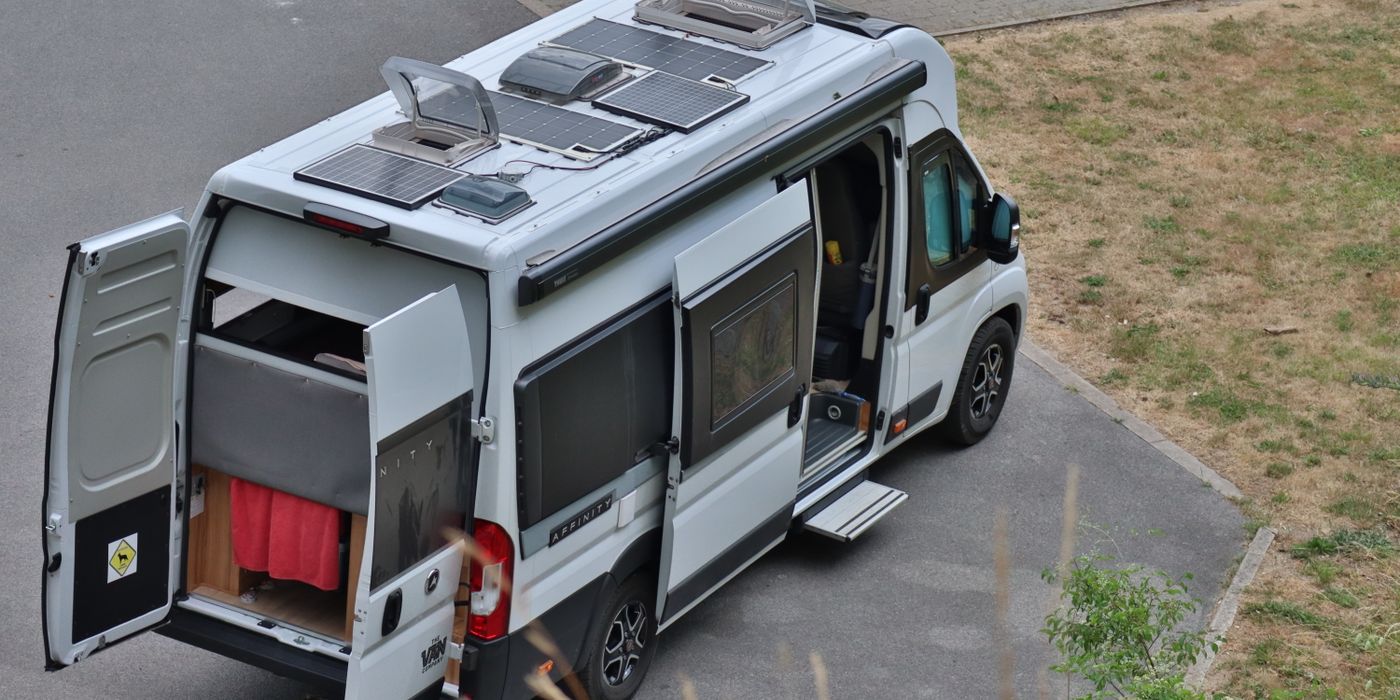
On each check, look at every sealant bead around the edges, the front and rear caps, and each fixture. Press a few beads with a fingertip. Healthy sealant has give. Cracked, hard, or lifting sealant needs attention. Look for anything that has changed since the last check: a new crack, a new gap at a corner, a vent lid that has gone brittle.
The photo log that protects you
The most useful habit here costs nothing. Every time the roof is checked, take the same set of photos from the same angles, and keep them with the date.
- One wide shot of the whole roof from each end.
- A close shot of each fixture: every vent, the skylight, the antenna, the AC, solar mounts.
- Close shots along each edge molding and at the front and rear cap seams.
- A note of anything resealed and the product used. Builders commonly ask that you use the sealants they specify during the warranty period.
- Receipts for any professional inspection or reseal, kept with the photos.
That folder does three jobs. It shows a warranty administrator or an adjuster that maintenance happened. It shows you how fast your sealant is aging, so you can plan rather than react. And if you sell the rig, it is the kind of record a careful buyer wants to see.
A realistic schedule for the Valley
The 90-day interval lines up well with Sacramento's year. A check in late September or October, before the rains, is the most important one, because roughly 80 percent of the Valley's rain falls between November and March. A check in early spring catches whatever winter did. The two in between catch what the summer sun did to the sealant.
If you have not been keeping up with it, the best time to start is the next check, with a full set of photos to set the baseline. And if you would rather have that baseline done professionally, a documented roof inspection gives you a dated record of every seam and fixture to work from.

The Nor-Cal Crew
Mobile detailing, ceramic coating & paint correction · Sacramento, California