
A wash takes dirt off the paint. An exterior detail takes off what the wash could not, then leaves something behind to protect the paint until the next one. Most of the difference is in steps you never see from the curb, which is why two quotes for an exterior detail can describe very different jobs.
This is the order we work in, and the reason for each step.
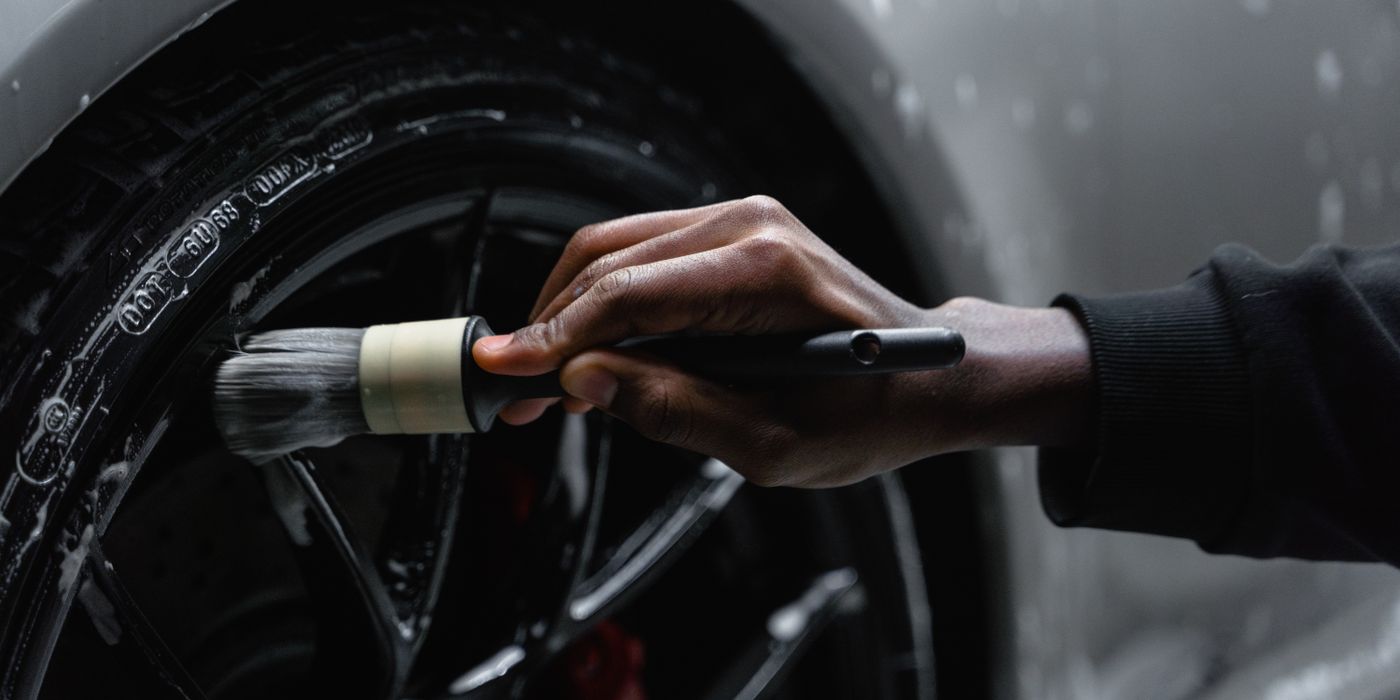
Wheels, tires, and wells come first
The wheels are the dirtiest part of the car, so they get cleaned before the paint. If you wash the body first and the wheels after, brake dust and road grime splash back onto panels you just finished.
Wheel faces and barrels get a cleaner that is safe for the finish, since polished, painted, and powder-coated wheels do not all tolerate the same chemistry. Tires get scrubbed until the brown residue stops foaming out, which matters because tire dressing does not stick to a dirty tire. The wheel wells get cleaned too, which is the step that makes the whole car look finished from a few feet away.
Pre-wash, then a contact wash
A foam or pre-wash soaks the car first to loosen grit before anything touches the paint. Then comes the hand wash, using clean mitts and a method that keeps dirty water away from the paint. Most swirl marks on a car come from washing, so this is the step where a careful detailer and a fast one differ the most.
Decontamination: what a wash leaves behind
After a wash, run the back of your fingers across the hood inside a thin plastic bag. If it feels gritty, the paint is holding contamination that soap does not remove. There are two kinds, and they need two different fixes.
- Iron. Brake dust and rail dust are tiny iron particles that embed in the paint and rust in place. An iron remover dissolves them; it turns purple as it works.
- Bonded grime. Tar, tree sap mist, and overspray sit on top of the paint and grip it. A clay bar or clay mitt, used with plenty of lubricant, pulls them off.
Decontamination is what makes the paint feel smooth again, and it is also what lets polish and protection bond properly. Skipping it means sealing the grit in.
Polish, if the paint needs it
Polishing is optional, and it is where quotes split the most. A full exterior detail at most shops does not include machine polishing. If the paint has swirls, haze, or light scratches, removing them is paint correction, which is a separate service priced by time.
Some details include a light all-in-one polish that cleans the paint and adds gloss in a single pass. That is a real improvement on dull paint, but it is not the same as correcting it. A good quote tells you which one you are getting.
If a quote says the car will be buffed, ask whether that means correction or a gloss pass. The price difference lives in that one word.
Glass, trim, and the details
- Exterior glass cleaned until there is no haze, and water spots treated if they will come off without polishing.
- Black plastic trim cleaned and dressed, or restored if it has gone gray. Wax residue on trim gets removed rather than left as white streaks.
- Door jambs, the fuel door, and the trunk lip wiped down, since those are where dirt collects out of sight.
- Exhaust tips cleaned, and badges and emblems detailed with a soft brush.
Protection last
The last step is putting something on the paint. That might be a wax, a synthetic sealant that lasts months, or a ceramic coating that lasts years. Bare paint after a detail looks great for a couple of weeks and then starts taking UV and spotting directly.
Tires get a dressing, and wheels can get a sealant that makes brake dust easier to wash off next time.
How to compare two exterior quotes
- Does it include iron removal and clay, or only a wash?
- Is there any machine polishing, and if so, is it correction or a gloss pass?
- What protection goes on, and how long should it last?
- Are the wheel barrels and wheel wells included, or only the wheel faces?
- Are door jambs and trim part of the job?
Five questions, and you will know what each quote is actually describing. If you would like us to look at the paint first, send a photo of the hood in daylight and one up close. That is usually enough to know whether it needs a detail or a correction.

The Nor-Cal Crew
Mobile detailing, ceramic coating & paint correction · Sacramento, California