
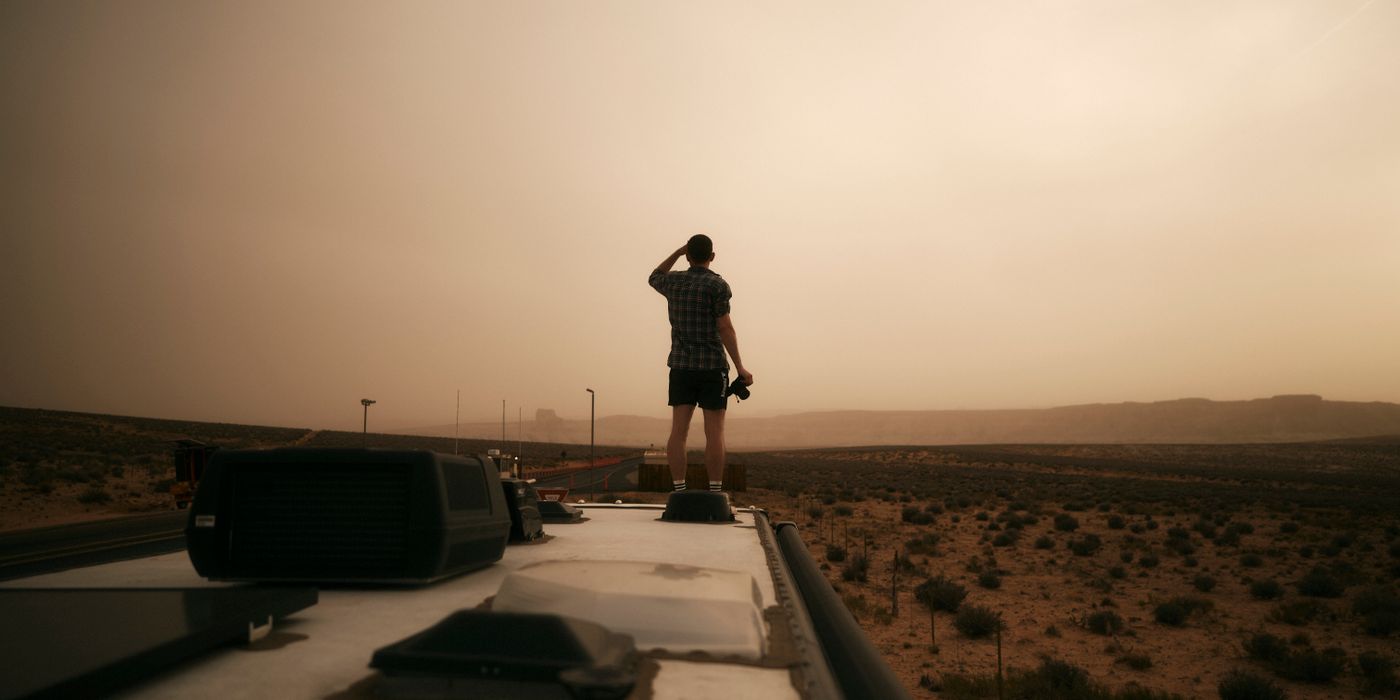
Every spring a lot of RV owners do the same thing. The rig has sat through the rainy months, the first trip is on the calendar, and someone decides to go up and take a look at the roof before they leave. That instinct is right. The roof is where RVs fail. But the first question is not what the sealant looks like. It is whether the roof can take your weight at all.
Some can, comfortably. Some can if you stand in the right places. And some were built as a weatherproof lid rather than a floor, and the first sign you are on one of those is a crunch underfoot that you will be paying to fix.
What is actually under the membrane
On most towables and many motorhomes, the roof is a sandwich. On top is the membrane, rubber or TPO or PVC, which on Dicor's own spec sheet runs between .027 and .035 of an inch thick. That is roughly the thickness of a credit card. Under it is a layer of decking, usually thin lauan plywood. Dicor's retrofit guide puts a quarter inch as the usual minimum on new units, with three eighths more common. Under the decking are the rafters, which carry the load.
The membrane is not structural and neither is a quarter inch of lauan spanning the gap between two rafters. Your weight is supposed to go into the rafters. Step in the middle of a span and you are asking thin plywood to do a job it was never sized for. It flexes, fasteners loosen, and on an older rig with any moisture in the decking it can crack or punch through.
How to find out if yours is walkable
- Read the owner's manual first. Many manufacturers say plainly whether the roof is walkable and how much weight it is rated for. If the manual says it is not walkable, that settles it.
- Look at the ladder. A factory rear ladder is a hint that the builder expected people to go up, and many ladders have a weight rating stamped or labeled on them. It is a reasonable sign, not a guarantee about the roof itself.
- Know the frame. Roofs framed with aluminum rafters, especially ones with a slight crown or bow, are generally sturdier underfoot than flat roofs framed in wood. That is a general pattern across the industry, with exceptions in both directions.
- Be cautious with small and light rigs. Pop-ups, teardrops, many ultralight travel trailers and a lot of truck campers are built to save weight, and the roof is often the first place that weight came out of.
- Call the manufacturer if you cannot find an answer. They know their construction and they would rather tell you than process a warranty argument about a cracked roof.
If it is walkable, walk it like it is not
Even a roof rated to carry a person rewards care. The goal is to put your weight where the structure is and spread it out wherever you can.
- Find the rafters. On many roofs you can see faint lines in the membrane where it sits on the framing, or feel the firmer spots with a gentle press of your foot. Step along those lines rather than across open span.
- Spread the load. A sheet of plywood or a purpose-made roof mat turns your weight on one heel into weight over several square feet. Move it ahead of you as you go.
- Stay off the edges and away from the front and rear caps unless the manufacturer says otherwise. The edges are where the membrane terminates and where the roof meets the walls.
- Keep your feet off vents, skylights, the air conditioner shroud, solar panels and conduit. None of them are steps.
- Go up dry. Dicor's own guidance warns that a wet membrane can be extremely slippery, and a slick rubber roof with a curved edge is a bad place to discover that.
- Wear soft-soled shoes with real grip. Hard lugs and anything with grit stuck in the tread will mark a membrane.
The membrane is about as thick as a credit card. Everything that keeps you from going through it is underneath, and it is only strong where the rafters are.
What to do if you cannot or should not go up
Plenty of useful inspection happens without anyone standing on the roof. From a sturdy stepladder set against the side, you can see most of the sealant along the edges, the front and rear cap seams, and the nearest fixtures. A phone on a long selfie pole, recording slowly, shows a surprising amount of the middle of the roof, and you can zoom in on the footage afterward at the kitchen table.
What a ladder and a camera cannot do is test the sealant with a fingertip, press around the fixtures for give, or clean the roof properly. For that, the right answer on a non-walkable roof is a lift or a platform that puts someone level with the roof without loading it. That is the reason we bring lift access to roof jobs instead of sending someone up a ladder with a scrub brush.
The early sign a roof has already been walked on too much
If you can get eyes on the roof, look for low spots or dished areas between rafters, especially along the usual path from the ladder to the air conditioner. Look for creases or wrinkles in the membrane that run across the roof rather than along it. And look for screw heads that have started to stand proud of the surface, because a flexing deck works fasteners loose from below.
Each of those means the decking has been taking load it should not have, and each is worth a closer look before more weight goes on it. A soft or spongy feel anywhere is the more serious version, because soft decking usually means moisture, and that turns a roof check into a different conversation.
Why this matters more than it seems
Owners who never go on the roof tend to let sealant go too long. Owners who go on a roof that cannot take them tend to cause the damage they were checking for. The useful middle ground is knowing which roof you have, inspecting it in a way that roof can tolerate, and doing it on a schedule rather than when a stain shows up on the ceiling.
If you are not sure whether yours is walkable, look for the answer in the manual and on the ladder before you set a foot on it. And if the answer is no, that is a good reason to have someone inspect it from a lift, with photos, so you can see the whole thing without risking the roof or your ankle.

The Nor-Cal Crew
Mobile detailing, ceramic coating & paint correction · Sacramento, California