
Every year around this time, Northern California wakes up to a grey film on every car in the neighborhood. And every year, thousands of people walk outside and wipe it off with whatever's handy — a towel, a duster, a t-shirt. That single motion causes more paint damage in this region than the ash itself ever will.
What wildfire ash actually is
Let's start by correcting something you'll read on nearly every detailing site: ash is not lye. The largest study we could find measured 148 samples across 42 ash types and found a mean pH of 8.8, with a range of about 6 to 11.2. That's alkaline enough to matter, but it is not the pH 12 caustic bath the internet describes. Compositionally it's mostly organic carbon with meaningful calcium, aluminium, and iron, plus trace metals like manganese, zinc, and lead.
One important caveat: that data is for vegetation ash. When structures burn — the scenario in the worst recent California fires — the ash includes combusted plastics, treated lumber, batteries, and older building materials. That mix is far more chemically variable, and nobody can hand you a reliable pH for it. Treat structure-fire ash as more hazardous, not less, and wear a mask while you deal with it.
Two ways it hurts your paint
The first is abrasion, and it's the big one. Ash carries hard silica and mineral particulate with sharp, angular edges. Dragging that across clear coat with a dry towel is functionally sanding your car by hand. This is the dominant damage pathway, and it's entirely self-inflicted.
The second is chemical. Once ash gets wet — dew, fog, a light drizzle, or sprinkler overspray — the alkaline calcium and potassium compounds form a caustic slurry that clings to the panel and can dull or etch clear coat if it sits. We want to be honest here: we could not find a controlled study putting a timeline on this, so ignore anyone who tells you ash etches paint in exactly 24 hours. What's defensible is the direction — the risk climbs sharply once ash gets wet and hot.
Partial wetting is the worst case. A light drizzle turns ash into a paste that's both caustic and abrasive, without enough water to float anything away.
How to actually remove it
- Don't wipe, dust, or brush dry ash. No California duster, no towel, no hand. Nothing dry touches the paint.
- Don't use a leaf blower. Both the EPA and CDC advise against it — it re-aerosolizes fine particulate you'll then breathe, and it doesn't get the ash off cleanly anyway.
- Flood the car first and don't touch it. A generous low-to-moderate-pressure rinse from the top down, letting sheeting water carry particles off before anything makes contact.
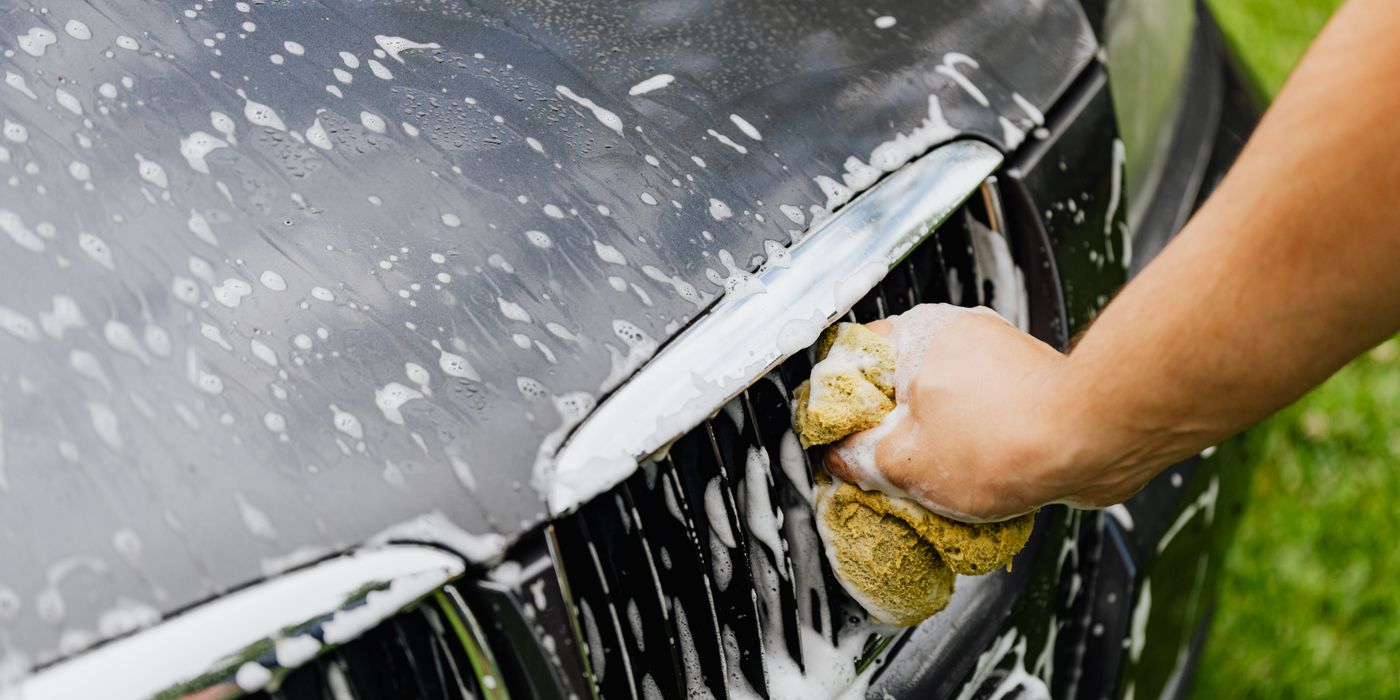
- Pre-soak or foam with a pH-neutral soap to neutralize the alkalinity and add lubrication before a mitt goes anywhere near the paint.
- Then wash normally — two buckets, grit guards, frequent mitt rinsing. Expect to change your wash water more often than usual.
Where the water goes matters
The EPA specifically advises washing ash-covered vehicles over a lawn or vegetated area, or at a commercial facility, rather than letting the runoff go into a storm drain. That's a genuine environmental point and not a small one after a major fire event — storm drains in Sacramento largely discharge to the river system. It's also, frankly, the part of ash cleanup that's easiest to get wrong at home with a hose in the driveway.
Plan around the season
Northern California's fire season generally runs from June or July into late October, and peaks in August and September when fuels are at their driest — which means the heaviest ash fallout usually lands right when Valley heat is also at its worst. In 2020, smoke plumes covered every single California county for at least 46 days, and some counties for more than 120. Whatever this season brings, the vehicles that come through it best are the ones with protection already on them: a coating or sealant gives ash far less to grip, and makes the safe removal process considerably faster.
If you've got ash sitting on your car right now, the best thing you can do is leave it alone and call us. We arrive with our own water and a process built for exactly this — and we'd much rather rinse it off correctly than correct the swirls afterward.

The Nor-Cal Crew
Mobile detailing, ceramic coating & paint correction · Sacramento, California