
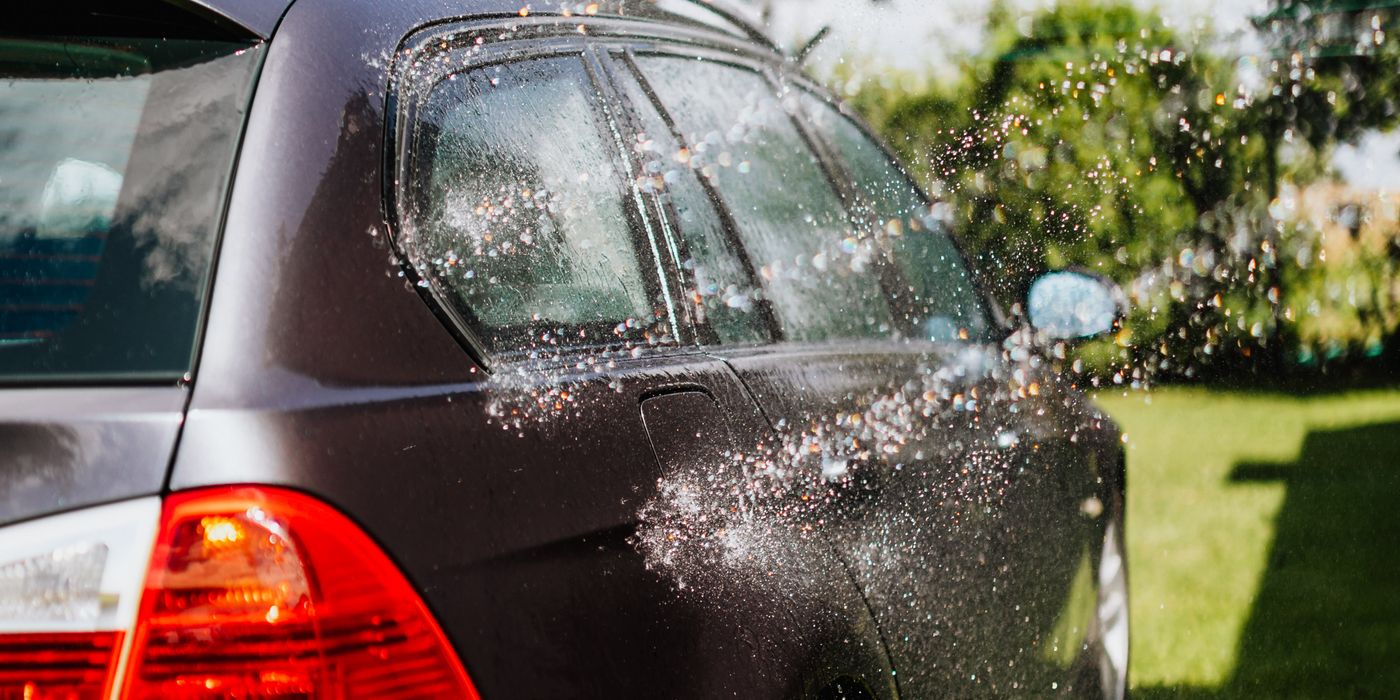
Water spots are the most common paint complaint we get in summer, and also the most misunderstood. Two cars can have spots that look identical from six feet away — one wipes clean in thirty seconds, the other needs machine polishing. The difference isn't the spot. It's how far into the clear coat it got.
First, a local myth worth correcting
You'll read everywhere that Sacramento has notoriously hard water. The utilities' own reports say it depends entirely on which tap you're standing at. The City's American River treatment plant delivers water around 34 mg/L — about 2 grains per gallon, which is genuinely soft. The Sacramento River plant runs about 63 mg/L, or 3.7 grains. But suburban groundwater is a different animal: Sacramento Suburban Water District reported groundwater averaging 7.4 grains and ranging as high as 13.5 — up to 230 mg/L, squarely in the USGS's very hard category.
So the spread across this metro is roughly twentyfold, and it shifts seasonally as districts switch between river and well supply. The practical upshot: if your car sits where an unsoftened well or landscape irrigation system hits it, you have a much bigger problem than your neighbor two miles away. Sprinkler overspray is the single worst offender we see on parked cars.
The three levels, and the fingertip test
- Surface deposits — chalky white rings sitting on top of the clear coat. They feel slightly raised and gritty. A wash, a quick detailer, or a mild water-spot remover takes them off.
- Bonded minerals — hazy or faded-looking, won't wipe away, but the surface still feels mostly smooth. These need a dedicated water-spot remover or a light polish.
- True etching — the mineral has chemically eaten into the clear coat, so the spot sits below the surrounding surface. No chemical on earth fixes this.
You can diagnose it yourself in about five seconds. Wash and dry the panel, then run a fingertip over the spot — a plastic sandwich bag over your hand makes the texture easier to feel. Smooth means it's a deposit and chemistry will handle it. If you feel a pit or a crater, that's etching, and the only fix is mechanical: machine polishing to carefully level the clear coat down to the base of the crater. Deep etching needs wet sanding before the compounding starts.
A deposit sits on your paint. Etching is a hole in it. That's the whole distinction, and you can feel it with a fingertip.
Why letting it dry in the sun is the whole problem
When a droplet evaporates, the dissolved calcium and magnesium in it don't evaporate with it — they get concentrated into an increasingly dense deposit right where the drop sat. Heat then accelerates the chemistry and softens the clear coat, making it easier to attack. That's the entire mechanism, and it's enough to explain everything you see. (You'll read claims that UV raises the pH of the minerals; we couldn't find any chemical basis for that, so we'll leave it out.)
What follows from it is simple and worth actually doing: never wash in direct sun, never let a car air-dry in Valley summer heat, and dry immediately with a plush towel or forced air. The hotter the panel at the moment that last droplet finishes evaporating, the worse the spot it leaves behind.
Why we don't just polish everything
Because clear coat is finite. Detailers generally work on the understanding that a factory clear coat is only tens of microns thick and that every correction pass spends some of it — which is why we measure before we polish and won't chase a defect deeper than the paint can safely give. The load-bearing point isn't the exact number, which sources disagree on. It's that your car has a limited number of corrections in it over its life, and burning one on preventable water spots is a bad trade.
Prevention is almost free by comparison: keep protection on the paint so water beads and leaves rather than sitting, move sprinklers off the driveway, and dry the car instead of letting the sun do it. If you already have spots and can't tell which kind they are, send us a photo in raking light — or let us run a fingertip over it in person and tell you honestly whether you need a wipe or a polish.

The Nor-Cal Crew
Mobile detailing, ceramic coating & paint correction · Sacramento, California