
Waterless and rinseless washes get two reactions: people who swear by them and people sure they scratch paint. Both are right, depending on how dirty the car is. These are tools for specific conditions, and used outside those conditions they do cause swirls.
How a traditional wash protects the paint
A hose wash works by floating dirt off before anything touches it. A pre-rinse and foam soak loosen and carry away most of the grit, then the wash mitt removes what is left, and the rinse carries it all away. Lots of water means lots of lubrication and lots of chances to get grit off the paint before it is dragged.
For a dirty car, a proper hose wash is the safest option. It is also the one that uses the most water and needs somewhere for that water to go.
Rinseless: a bucket and no hose
A rinseless wash uses a concentrated solution mixed into a bucket of water. The solution is packed with lubricants and polymers that surround dirt and lift it off the paint. You wash a panel with a soaked mitt or towel, then dry it immediately. There is no rinse because the solution leaves nothing behind that needs rinsing.
Done carefully, with lots of clean towels and a fresh one whenever a towel gets dirty, rinseless is gentle and uses a few gallons for a whole car. It suits light to moderate dirt: a car that has been driven for a week or two, dusty but not muddy.
Waterless: a spray bottle and towels
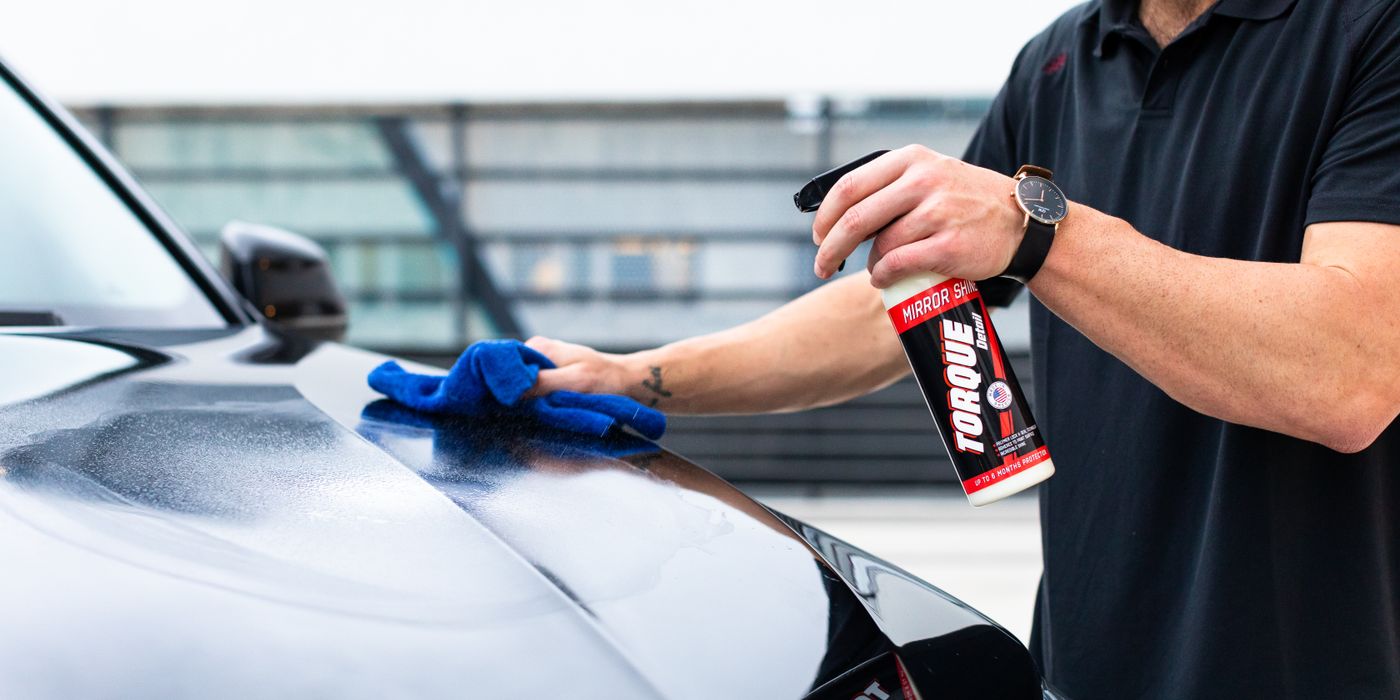
A waterless wash is a spray that lubricates the surface so a microfiber towel can lift the dirt. Spray, wipe gently in one direction, flip the towel, and buff dry with a second towel. It uses almost no water.
It is the most limited of the three. It is meant for light dust, fingerprints, and fresh bird droppings on a car that is already clean and protected. On a dirty car, there is not enough lubrication to keep grit from scraping across the paint.
The less water a method uses, the cleaner the car has to be before you start.
When each one is the right call
- Light dust on a garaged or coated car: waterless is fine and quick.
- A week or two of normal driving, no mud: rinseless works well and is easy on paint.
- Mud, sand, road grime, or a car that has not been washed in a month: full wash with a pre-rinse, every time.
- After rain or sprinklers, with spots dried on: a rinseless wash handles it, or a full wash if there is grit too.
- Bird droppings or bug splatter: soak first with a waterless or detail spray, wait a minute, then lift. Never wipe them dry.
Why coatings make these methods better
A coated or well-sealed car is slicker, so dirt has less grip and lifts off more easily with less pressure. Coated cars are where waterless and rinseless washes work best, and why owners who maintain a coating this way can go a long time between full washes.
How we use them
We carry our own water, so we are not forced into a waterless wash when a car needs a real one. We use rinseless for maintenance washes on clean, protected cars and for areas where a hose wash is not practical, and a full wash with a pre-rinse for anything with real dirt on it. The method follows the car, not the other way around.
If you are washing at home with a rinseless product, the two things that matter most are lots of towels and changing them often. A dirty towel is where the scratches come from.

The Nor-Cal Crew
Mobile detailing, ceramic coating & paint correction · Sacramento, California